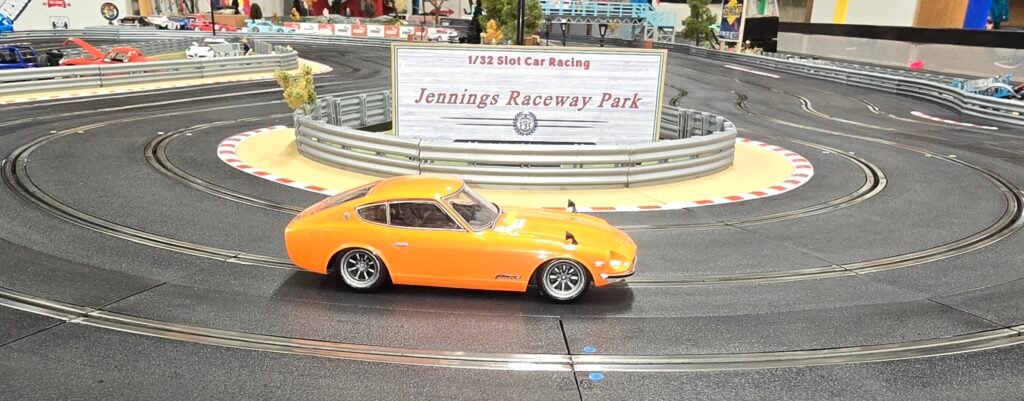
🏁 Jennings Raceway Park — Track Profile
📍 Location & Ownership
Track Name: Jennings Raceway Park
Owner/Host: Erik
City/Location: Edgewood, Washington
Year Built: 2016
Designer/Builder: Erik (JohnnyGreaseBones)
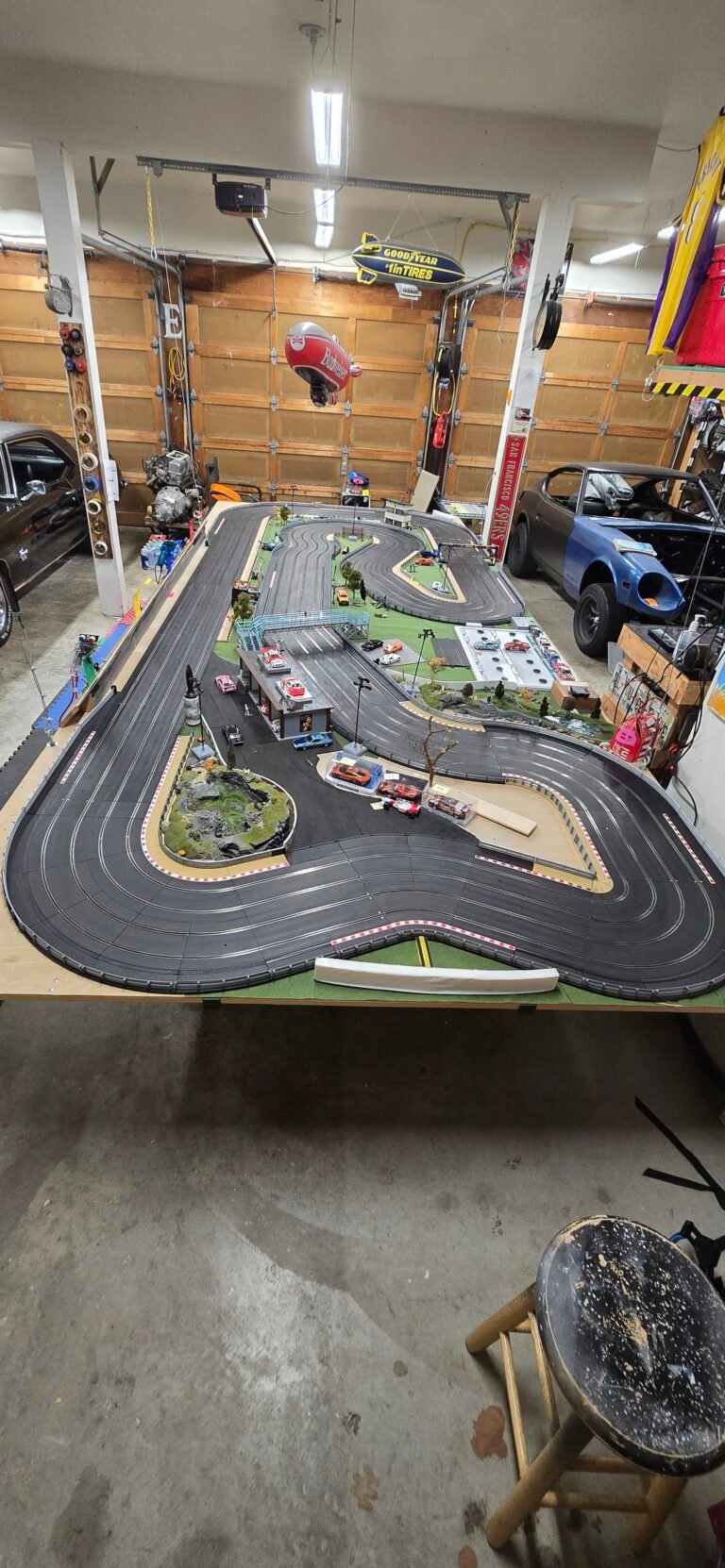
Jennings Raceway Park has evolved through three major configurations since its debut, growing in both footprint and ambition while keeping its original character intact.
🛠️ Construction & Technical Specs
Track Type: Plastic
Number of Lanes: 4
Track Length: 55 feet
Lane Spacing: Standard Scalextric Sport spacing
Surface Type: Scalextric
Power Supply: Pyramid PS‑26KX
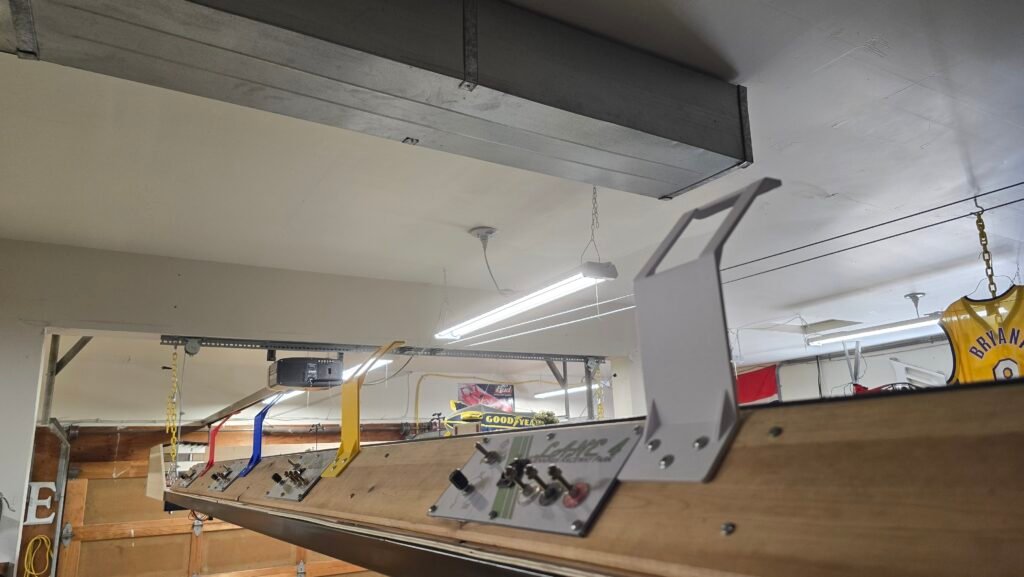
Driver Station Connections: XLR plugs with brake pots and posts
Lap Timing System: DS timing boxes, DS light bridge, DS stop boxes
The combination of Scalextric surface, DS timing hardware, and a stable Pyramid power supply gives the track a classic club‑racing feel with reliable lap detection and consistent voltage delivery.
⚙️ Race Format & Systems
Race Format: Laps, Crash & Burn
Tire Type: Other
Driver Aids: No
Crash & Burn racing on a four‑lane Scalextric layout creates a tight, high‑stakes environment where clean driving and rhythm matter as much as outright speed.
🏗️ Track Evolution & Engineering
Jennings Raceway Park is unique in EMSA for its ceiling‑suspended design, lowered and raised using a winch and pulley system. This engineering choice allows a full‑size home track to exist in a shared space without sacrificing footprint or drivability.
Three major eras define the track’s history:
2016–2018: Original 4‑lane layout, 7′ × 10′
2018–2022: Expanded second configuration, 7′ × 14′
2022–Current: Current full‑length build, 7’6″ × 18′
Each redesign increased the track’s scale, flow, and racing potential while preserving the suspended‑table concept that makes Jennings Raceway Park instantly recognizable.
🏎️ Track Identity & Community Contributions
Jennings Raceway Park is as much a community project as it is a personal build. Several contributors played key roles in shaping the track into what it is today:
Tony Kuljis — Assisted with the original design and supplied roughly half of the initial track pieces.
Greg Gaub (Mr. Flippiant) — Provided 3D‑printed components, including the controller holders at each driver station.
Roy Heimes — Welded the brackets for the winch system that raises and lowers the track.
Erik’s father — Helped construct the current table.
Erik’s wife — Supported the project and “let him play with toy cars.”
Glory to God — Acknowledged by Erik for the blessings in his life.
This blend of engineering creativity, community support, and personal passion gives Jennings Raceway Park a character that stands out among regional home tracks.